The average cost of storm-damaged tree removal is $200 to $2,000, but if the tree removal is urgent same day, the cost can be as high as $5,000 and emergency service after a storm will cost 25 to 50 percent more than a scheduled job. That additional cost is a surprise for Bronx homeowners, typically in the midst of a stressful period, primarily because no one tells them what they are getting for that cost. Emergency tree removal is not simply the same tree work done in a rush, but it does require a different assessment process, a different type of rigging and safety precautions which most people have never encountered. Here’s exactly what happens at each stage, so you know what’s included before you’re forced to figure it out during a crisis.
What Qualifies as an Emergency Tree Situation?
Not all tree issues constitute a true emergency, and it can be helpful to understand this to set expectations for time required to respond and cost.
Situations That Require Immediate Response
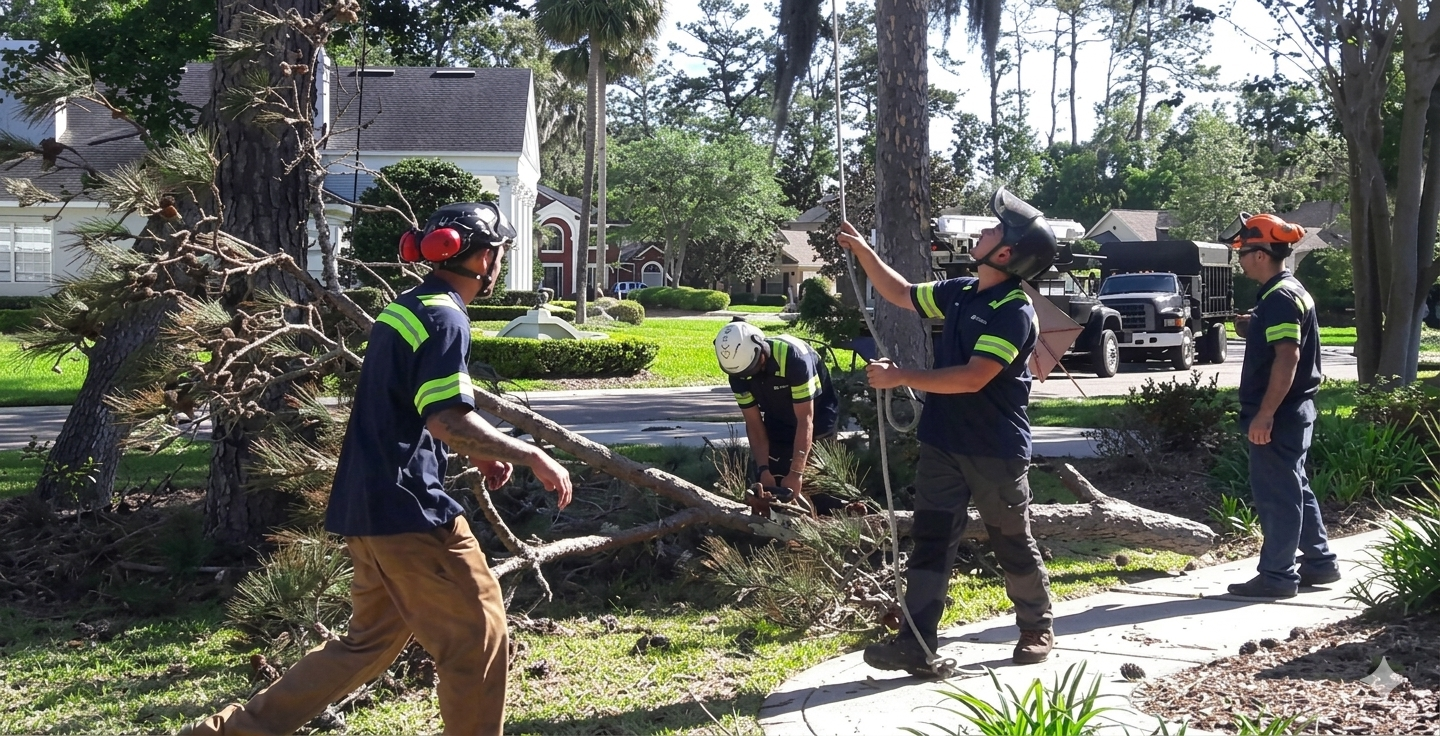
Immediate hazards usually involve a tree that has already fallen on a house, car, or roadway; a tree that leans dangerously after a storm; large limbs that are precariously hanging over a walkway or driveway; or a tree that is down and has exposed power lines. These situations involve active risk of loss of life or property and demand a quick response, in the hours, not days, or a secondary failure may occur.
Situations That Can Wait for Scheduled Service
In contrast, if a tree has slow decline, minimal deadwood, or cosmetic damage, it is still important to correct the situation but generally does not warrant emergency work, and can usually be deferred and done as routine work instead. While some indicators, such as canopy thinning, a few dead branches or light damage to the bark, may be enough to have assessed, signs do not have the same risk as a tree that is down or actively failing.
When in Doubt, Call for an Assessment
If you are not certain about what category your situation is in, then it is always worth to call a professional and ask. A brief phone call to describe the condition and location of the tree will normally convey to an experienced crew whether this is a same day emergency or one that can be attended to within a week, avoiding an unnecessary premium charge or waiting for a genuine hazard to be dealt with.
Step 1: The Initial Emergency Call and Triage
One of the first things that occur when you call an emergency tree removal company in The Bronx is a phone triage assessment. Dispatcher will ask specific questions: Is anyone injured? Does the tree come into, or are in close proximity to, power lines? Does it obstruct the roadway or the only entrance to your home? Is it leaning on or propping against something? These answers prioritize the job, and dictate the type of crew that is dispatched.
Most reputable companies will tell you that if power lines are present, you should reach out to Con Edison before their crew arrives because the utility company will need to de-energize the lines before any tree work can be performed in the immediate vicinity of the power lines.
Step 2: On-Site Safety Assessment
On arrival of the crew, the initial stage is not ‘cutting’ it’s ‘assessing’. A certified arborist or lead technician assesses the tree’s location, the tension and direction of the wood, the condition of any other buildings nearby and any other potential dangers such as limbs still overhead which may be unsafe. This evaluation dictates the order of operations and removal method as a tree leaning on a home will need to be approached differently than a tree flat on the ground.
Addressing this step also involves determining if any portion of the tree has to be supported right away prior to being worked on, especially if it is unstable or partially supported by another structure.
Step 3: Securing the Work Area
The setting up of a safety perimeter around the work area is always a part of emergency removal. This sometimes requires communicating with neighbors, closing off parts of a drive or sidewalk and in some cases, notifying the city if a tree is blocking a public roadway in the Bronx’s dense residential neighborhoods. Temporary barriers, cones and caution tape are used by crews to keep pedestrians and vehicles out of the work zone during the entire job.
Step 4: Rigging and Controlled Dismantling
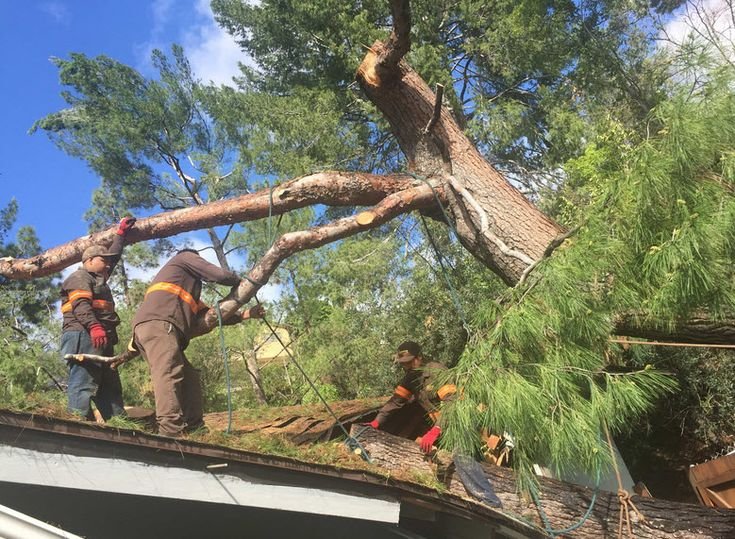
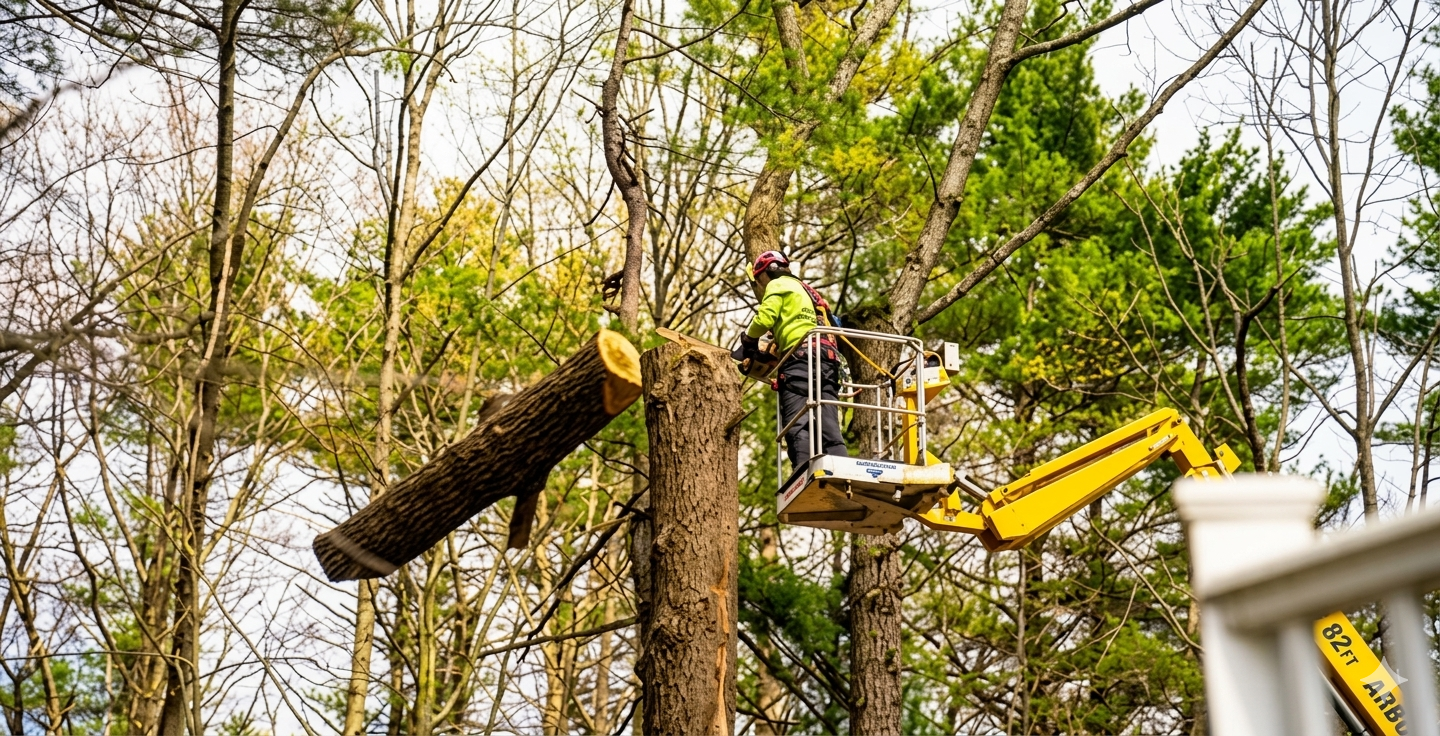
When trees are leaning on a structure or between tension wires, the normal felling methods are not safe. Crews, instead, rely on rigging systems, ropes, pulleys and, in some cases, cranes to manage the way and location of each tree section’s fall. One of the most technically demanding aspects of emergency work is this because if a miscalculation is made, it can cause further damage or injury to be done. To preserve the shape of the sections, they are usually cut and lowered section by section, especially in small Bronx lots where there is minimal room for error.
Step 5: Debris Removal and Site Cleanup
Debris hauling follows once the tree is safely down, the crew then begins to clear the property of branches, logs and wood chips. This clean up is not an extra service by most emergency removal companies, as the very point of an emergency removal service is to remove the debris. This usually involves clearing driveway, walks and any obstructed areas due to the fallen tree.
Step 6: Stump Handling
Stump grinding may or may not be part of the initial emergency visit, depending upon the circumstances. During an emergency call in many cases the job of the first priority is to get the hazard cleared as soon as possible, and to follow this up with a stump removal job at a later date when the immediate threat has subsided. Some providers may factor in the stump work to the bill, while others may charge it separately, so there’s no harm in asking your provider if the stump work is included in the bill.
Step 7: Property Damage Documentation
A decent emergency tree service will also take pictures of the tree, the structure and surrounding area before and after the job has been done to document the damage for insurance purposes. This documentation can be useful if you file a homeowners insurance claim, especially if the damage is caused by the storm, because the cause and time of the damage are important factors in determining whether it will be covered.
Step 8: Final Safety Check and Cleanup Verification
A walk through is performed before the crew departs, to verify that there are no hazards left, no debris was left behind, and the property is safe to use again. This involves taking note of other trees in the vicinity that may have been impacted by the same storm or event, as it may require multiple trees to be addressed on a single property.
How Emergency Pricing Differs From Standard Removal
The cost of emergency tree removal is often greater than scheduled tree removal services and knowing why is important to avoid being caught off-guard during the stressful time. Emergency pricing takes into account late hours, rigging around structures, and same day or overnight rigging. Reputable companies should still provide a clear quote before starting major work whenever safety allows for that pause, even in an emergency scenario.
What Bronx Homeowners Should Have Ready Before Calling
With some information available, response time is significantly reduced. This includes your address, best access to your property, if the tree is touching any power lines, if anyone is injured or photos if it is safe to take photos from a distance. The quicker and better equipped the responding crew is, the more accurate the upfront information dispatch will be.
Why Choosing an Experienced Emergency Crew Matters
There is a real risk involved in emergency tree work, both to the people involved and to the property so, therefore, experience and equipment are essential. Without the proper setup or experience dealing with storms, a crew can cause further damage trying to remove the debris, when a more experienced crew could have done so cleanly. This experience gap is even more significant in the Bronx, where its dense residential blocks often contain neighboring homes that could be damaged if the cutting is not done properly.
When you have a tree down or an unsafe tree at your Bronx property, knowing what a tree emergency response should encompass will help you determine if you are receiving the type of service you need. Bronx Tree Company emergency tree removal in Bronx handles all aspects of the work, from assessing safety to clean up after the task is completed, so Bronx homeowners can return to normal as soon as and as safely as possible.